Klyvora
Klyvora
Klyvora
Industry-proven hardware building blocks optimized for massive cloud-native backup architectures and deep learning cluster implementations.
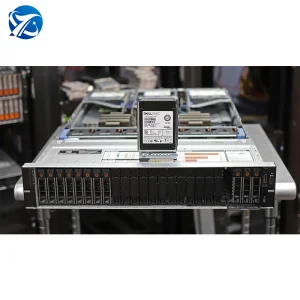
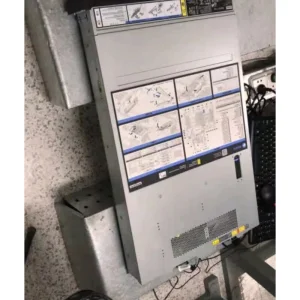
Deeply anchored in high-performance computing, advanced data storage systems, and system integration since 2013.
Dedicated architectural specialists focusing on thermal configurations, liquid cooling, and storage micro-code customization.
Ensuring consistent component procurement from top-tier chip manufacturers and memory foundries globally.
Proudly serving infrastructure integrators in North America, Europe, Middle East, and APAC.
Klyvora Node Technologies Ltd. is a high-performance computing infrastructure manufacturer specializing in AI GPU server systems, scalable compute clusters, and enterprise-grade data center solutions. Established in 2016, the company operates a modern production facility with a total building area of approximately 320㎡, supporting integrated R&D, assembly, testing, and quality control operations.
With over 6 years of direct global trade and export experience, Klyvora acts as a pivotal hub bridging the gap between rigorous enterprise storage needs and sophisticated hardware manufacturing. Our system architectures are built around optimizing data pathways, reducing Input/Output bottlenecks, and ensuring absolute data retention and recovery capabilities.
Data backup is no longer merely a cold-tier storage operation. With the sudden rise of LLMs, massive real-time analytical platforms, and compliance frameworks like GDPR and HIPAA, backup systems must execute instantaneous data recalls and deep indexing. Klyvora is spearheading the migration from legacy sequential tape drives to NVMe-oF (Non-Volatile Memory Express over Fabrics) and High-Speed SAS-driven tiered topologies.
"The future of data protection belongs to active-archive storage architectures. In active-archive, backup systems run parallel AI-driven deduplication workflows while allowing compute clusters to search through petabytes of archived records within milliseconds."
Modern enterprises implement a tripartite storage architecture to align budget with access performance requirements. The hardware infrastructure must adapt to each layer:
| Storage Tier | Primary Technology | Typical Interface | RTO / RPO Target | Best Platform Match |
|---|---|---|---|---|
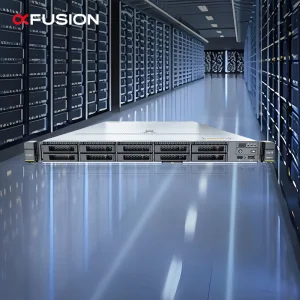
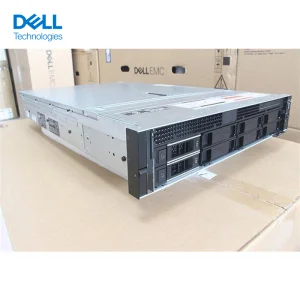
| Hot Tier (Metadata & Active DB) | Enterprise PCIe NVMe SSDs | U.2 / U.3 PCIe Gen4/Gen5 | RTO: < 1 Min / RPO: Real-Time | xFusion 2288H V7 / Dell R760 |
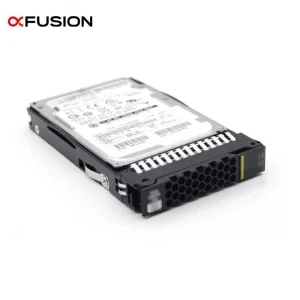
| Warm Tier (Periodic Snapshots) | 10K/15K RPM Enterprise HDDs | SAS 12Gb/s - 24Gb/s | RTO: < 1 Hour / RPO: < 4 Hours | FusionServer 5288 V6 / SAS 1.2TB |
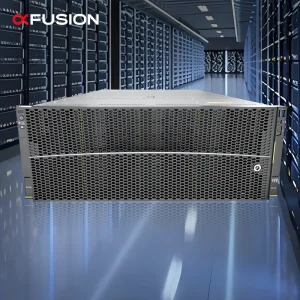
| Cold Tier (Compliance & Archives) | High-Density LFF SATA/SAS HDDs | SATA/SAS JBOD Arrays | RTO: < 24 Hours / RPO: < 24 Hours | FusionServer 5288 V6 (36 LFF Bays) |
As rack density surpasses 30 kW per cabinet due to intensive AI GPU deployments, traditional air cooling is hitting physical limits. Klyvora’s R&D team is developing integrated chassis designs optimized for dielectric fluid immersion cooling. By maintaining backup controller nodes under stable liquid thermal environments, systems experience zero CPU throttling during intense compression and encryption operations, assuring reliability when a disaster recovery scenario demands 100% duty cycle throughput.
Enterprise backup is not a one-size-fits-all product. Different macro-industries exhibit vastly divergent data retrieval behavior and regulatory pressure. Klyvora partners with global integrators to deliver tailored hardware topologies.
Deploying multi-tenant xFusion and Dell PowerEdge platforms with high network interface card (NIC) virtualization density. Focuses on handling millions of parallel IP streams and backing up network state information without latency degradation.
Mandating physical hardware isolation, hardware security modules (HSM) support, and dual-active replication loops. Klyvora supplies specialized server nodes configured with redundant SAS drives to assure write-verification at a controller level.
Mission-critical systems running on platforms like the 2488H V5 4-Socket server. These environments necessitate large RAM allocations (up to 3TB+) for in-memory processing, meaning backups must stream directly from RAM to warm storage pools with zero latency.
Deep learning clusters demand checkpoint backups every few hours. Checkpoints dump raw GPU weights (hundreds of gigabytes) instantaneously. We build high-throughput InfiniBand/RoCE-connected storage clusters specifically for this load.
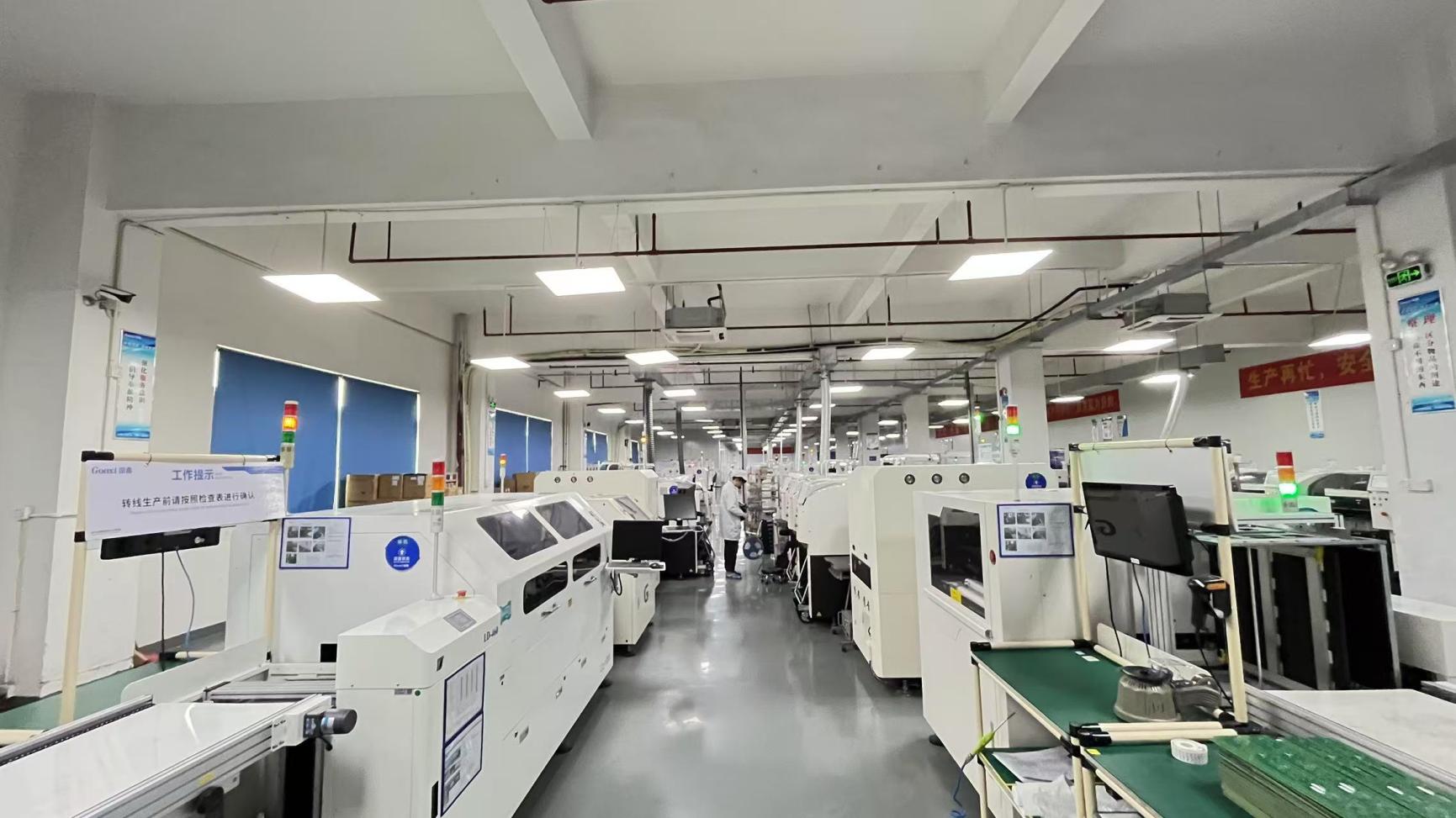
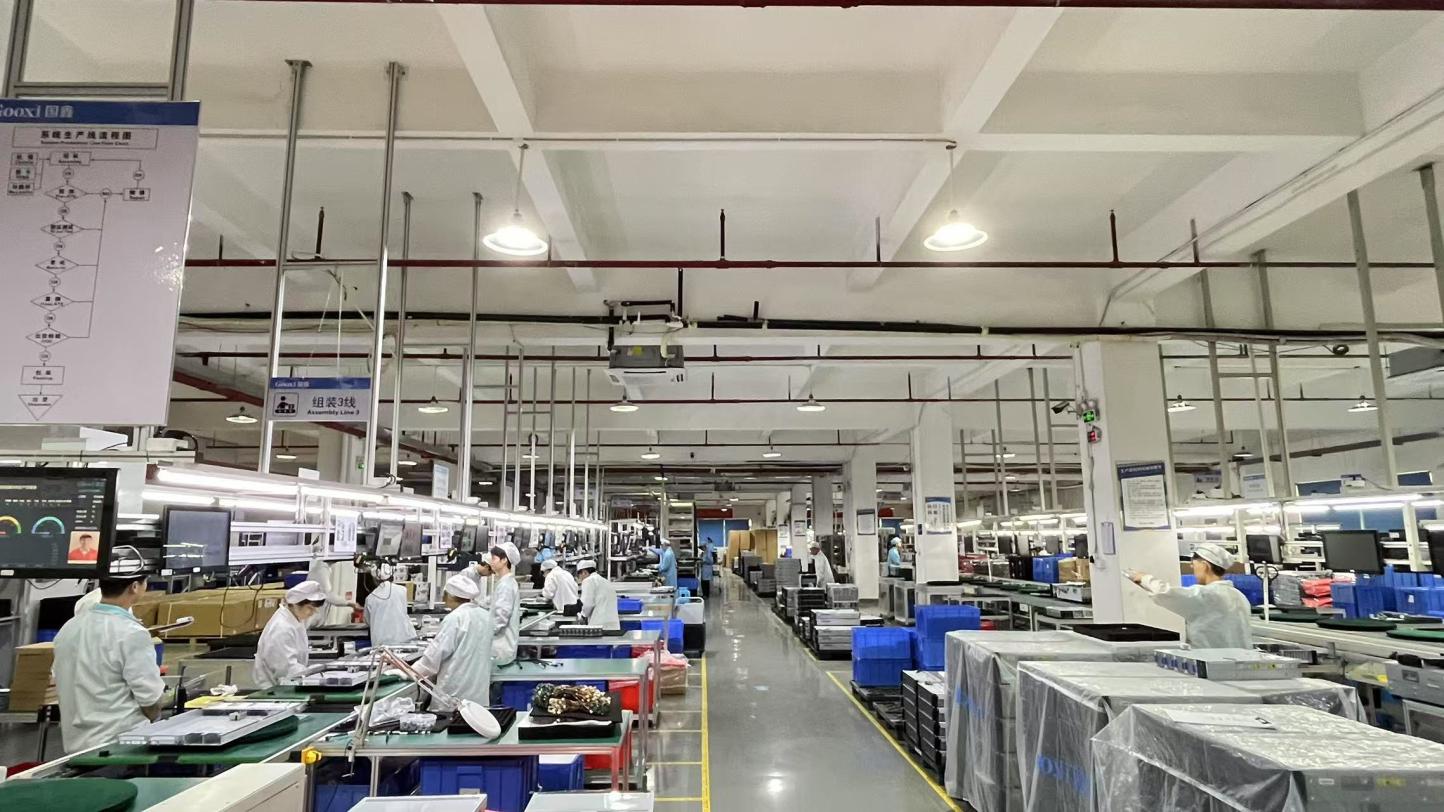
Klyvora Node Technologies utilizes its state-of-the-art 320㎡ integrated laboratory and assembly facility to execute precise verification protocols. We operate a highly optimized localized supply chain that guarantees consistent component access, insulated from regional sourcing shocks.
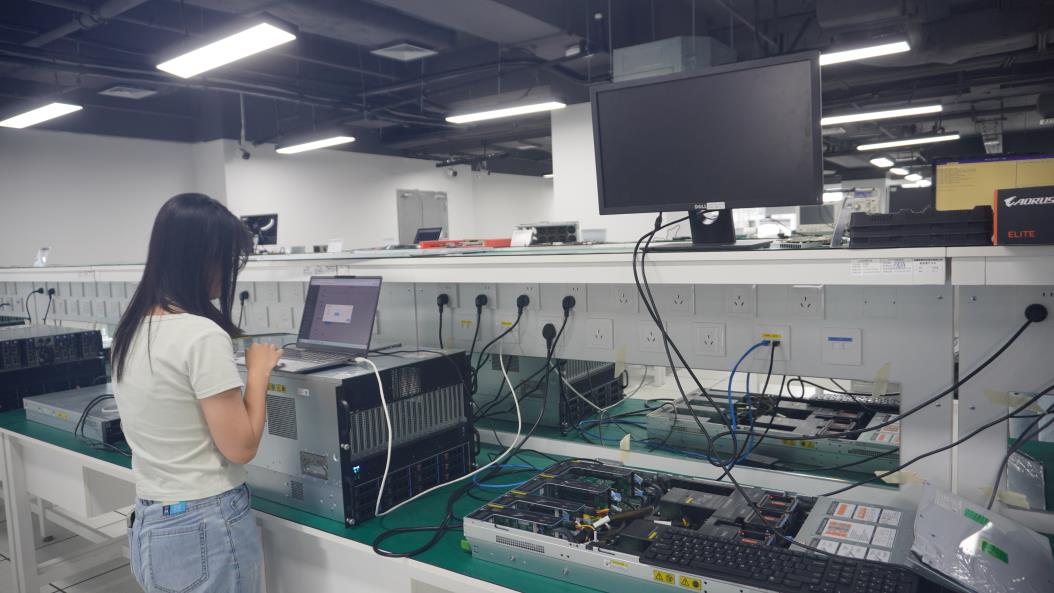
Each server node undergoes a multi-stage validation pipeline managed by our 42-strong Quality Assurance division before leaving the facility:
Our expansive relationship network with global component vendors enables Klyvora to bypass the long lead times that plague the general server industry. Whether our clients require specialized SAS HDDs, high-wattage 2000W redundant PSUs, or scarce Xeon/Gpu processors, our network guarantees access. This supply chain flexibility allows us to launch innovative configurations rapidly—evidenced by our rollout of approximately 86 new, optimized computing products in the last fiscal year alone.
Deploying storage hardware globally means navigating a labyrinth of electrical certifications, importation rules, and localization needs. Klyvora provides end-to-end support to ensure that physical hardware seamlessly integrates into the buyer's destination environment.
We do not just ship bare metal. Our R&D team works directly with clients to perform firmware-level modifications:
Klyvora ensures that all exported systems comply with local regulatory frameworks, including CE, FCC, RoHS, and UL guidelines. We provide complete documentation packets, commercial invoice structures, and customs classification codes (HS Codes) to guarantee smooth import clearing at any global port of entry.
Choosing between on-premise high-density storage hardware and public cloud backup involves analyzing long-term Total Cost of Ownership (TCO). While public cloud offers low entry costs, egress fees and recurring storage subscription costs scale exponentially when dealing with petabytes of archival data. By purchasing customized Klyvora storage clusters, enterprises can achieve complete ROI within 18 months.
TCO Case Study: An enterprise requiring 2 Petabytes of backup storage will spend approximately USD 40,000 monthly in cloud storage fees, plus variable bandwidth charges. Buying 4 dedicated high-density FusionServer nodes equipped with enterprise SAS HDDs represents a one-time hardware investment of roughly USD 65,000, reducing ongoing monthly expenses to basic facility electricity and maintenance.
Procuring from Klyvora is structured through three distinct phases: initial architecture specification (custom chassis, core density, storage controllers), automated QA testing with proof-of-performance logs, and secured global freight coordination utilizing shock-absorbent packaging.
Technical clarifications to help procurement officers and IT architects make informed platform decisions.
A1: SAS (Serial Attached SCSI) drives utilize dual-port controllers, allowing two separate communication paths to the drive. This provides hardware-level path redundancy. Furthermore, SAS drives feature superior error recovery controls (ERC) and queue depth optimizations, translating to substantially lower fail rates and better throughput when handling concurrent backup write operations compared to standard SATA drives.
A2: Our engineering team custom-designs internal chassis air shrouds to direct high-velocity airflow specifically across hot zones like CPU sockets and memory channels. In high-density storage servers, such as the xFusion 5288 V6 (which holds up to 36 LFF drives), we implement redundant hot-swappable counter-rotating fan walls that adjust dynamically based on real-time temperature telemetry from internal board sensors.
A3: Absolutely. We configure our hardware to be platform-agnostic. We can deliver servers with Host Bus Adapters (HBAs) flashed to IT (Initiator Target) mode, allowing software-defined storage operating systems direct, raw access to the individual hard drives, which is a strict requirement for ZFS and Ceph clusters.
A4: A 4-socket server consolidates enormous compute power and RAM resources into a compact rack footprint. For critical ERP applications or massive SQL databases, a 4-socket architecture eliminates the latency associated with node-to-node communication over local networks, allowing massive datasets to be held in system RAM for rapid local processing and database commits.
A5: We offer structured warranty frameworks, providing replacement parts (such as hot-swappable drive caddies, power supply units, and cooling fans) shipped via international express carriers. For large-scale datacenter deployments, we can arrange an on-site spare-part kit containing essential components to guarantee zero operational downtime.
A6: Deep learning model training requires massive storage bandwidth to save checkpoint data (system state and weights) without stalling the GPUs. Klyvora AI Rack Servers (such as the xFusion 2288H V7 and G5500 V7) are designed with PCIe Gen5 slots and support high-speed SmartNICs (such as Mellanox ConnectX series). This enables Remote Direct Memory Access (RDMA) over Converged Ethernet (RoCE), allowing direct GPU-to-Storage data transfers that bypass the CPU entirely, accelerating model checkpointing up to 10x.
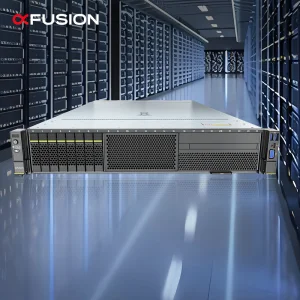
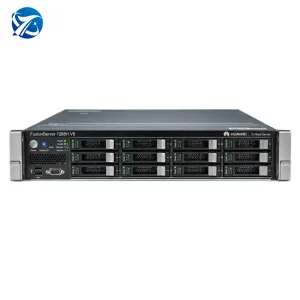
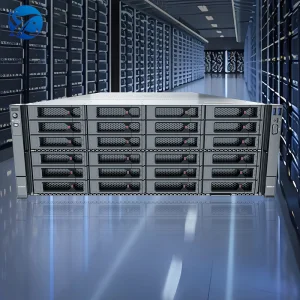
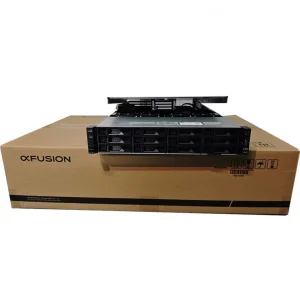
Explore our collection of high-capacity rackmount systems and components engineered for intensive datacenter operations and scalable cloud backups.
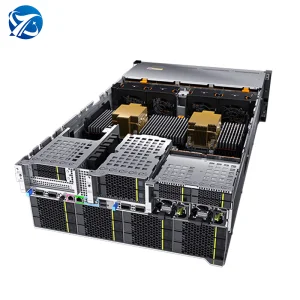
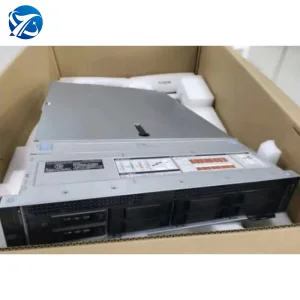
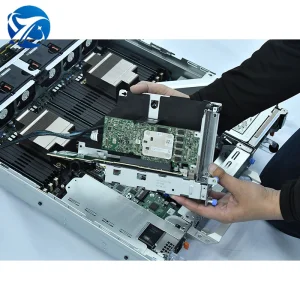
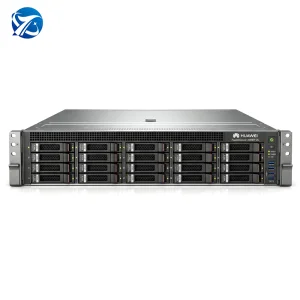
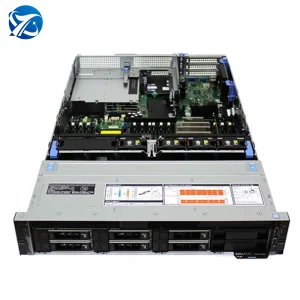
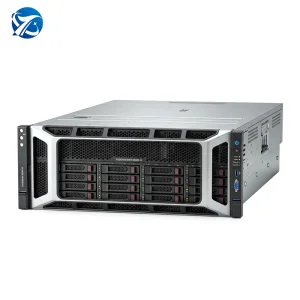
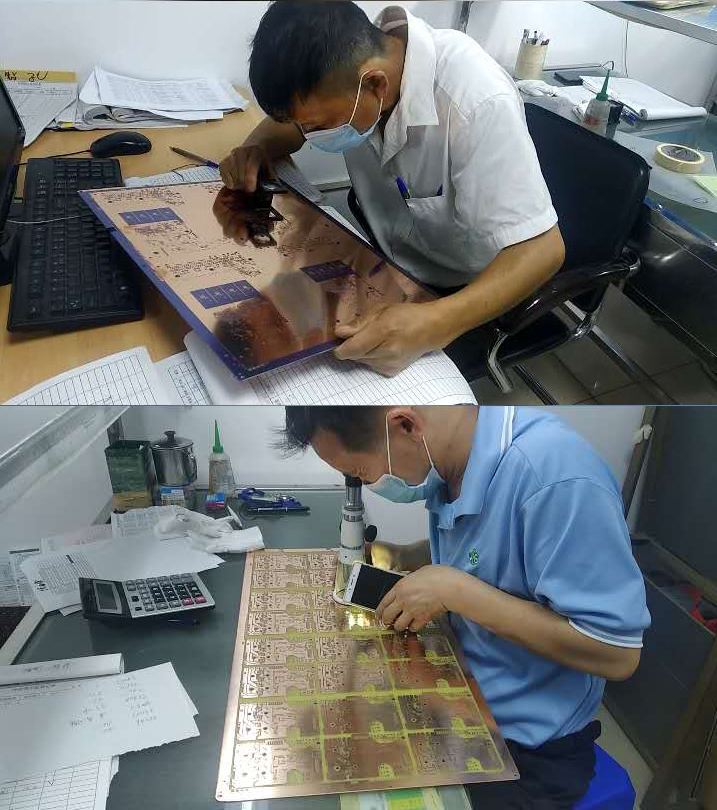
A glimpse inside our facility where quality control, hardware stress diagnostics, and advanced liquid cooling designs are integrated.