Klyvora Klyvora

How to Choose Global AI Server Manufacturers in 2026?

Time:2026-09-16 Author:Sienna
0%

Choosing among global ai server manufacturers in 2026 requires more than comparing processor names or advertised speeds. AI infrastructure is becoming a strategic investment, not a simple hardware purchase. IDC’s Worldwide AI and Generative AI Spending Guide indicates that organizations are expanding spending across servers, networking, software, and services. This broader view matters because a fast server can still underperform when its storage, cooling, or network fabric is poorly matched.

Look beyond the product sheet.

The Stanford Institute for Human-Centered Artificial Intelligence’s AI Index 2025 reports major progress in model capability and falling inference costs. These trends may increase demand for flexible, high-density systems. However, lower compute costs do not remove operational risks. Power availability, liquid-cooling readiness, component lead times, and long-term support can decide whether a deployment succeeds. The Uptime Institute’s data center research also continues to highlight resilience, power management, and operational discipline as central concerns for modern facilities.

A credible evaluation should examine GPU and accelerator options, energy efficiency, firmware transparency, cybersecurity practices, warranty coverage, and regional service capacity. It should also test realistic workloads, such as model training, retrieval-augmented generation, and high-volume inference. Vendor references are useful, but they are not proof.

No shortlist is perfect.

Buyers should request measured performance, failure-rate data, delivery commitments, and evidence of compliance with applicable standards. They should question unusually low prices and vague efficiency claims. The best global ai server manufacturers are not necessarily the largest brands. They are the partners that can provide dependable engineering, verifiable results, and adaptable support throughout the server’s lifecycle.
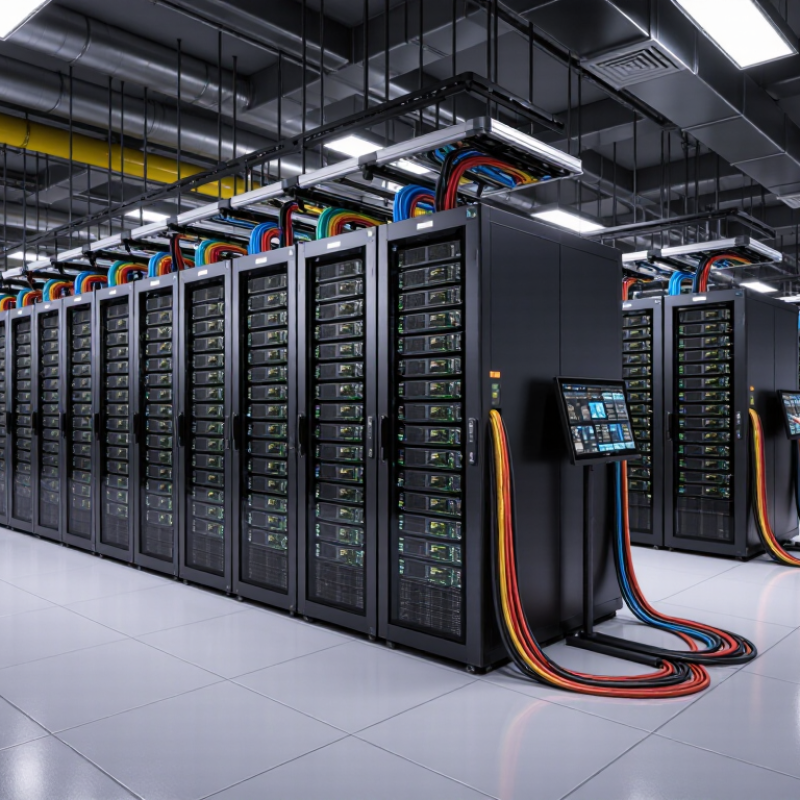
How to Choose Global AI Server Manufacturers in 2026?

Understanding the Global AI Server Manufacturing Landscape in 2026

How to Choose Global AI Server Manufacturers in 2026?

Understanding the Global AI Server Manufacturing Landscape in 2026

In 2026, choosing a global AI server manufacturer requires more than comparing processor speed. The market now depends on regional production, advanced cooling, and resilient component supply. Manufacturers with facilities across several regions may reduce delivery delays and improve service continuity. However, a wide factory network does not automatically guarantee consistent quality.

Practical evaluations should examine rack density, power efficiency, thermal control, and upgrade flexibility. Liquid cooling is becoming more important for intensive model training, especially in compact data centers. Ask for measured performance data, not only laboratory estimates. Review factory audit reports, quality certifications, warranty terms, and spare-parts locations. These details often reveal operational maturity.

Look beyond the brochure. Talk with technical teams that have managed similar deployments. Their experience can expose weak documentation, slow repairs, or unstable firmware. Regional compliance knowledge also matters, because data-center requirements differ across markets. A reliable manufacturer should explain testing procedures clearly and provide traceable product records. Some suppliers may offer attractive prices while underestimating installation costs. That is where buyers need caution. I would also question assumptions about future expansion; a system designed for today’s workload may become restrictive within two years. Leave room for imperfect forecasts, changing energy prices, and unexpected maintenance demands. Reliability is not a single specification. It is demonstrated through evidence, communication, and repeated performance in real operating conditions.

Defining Technical Requirements for AI Server Deployment

How to Choose Global AI Server Manufacturers in 2026?

Defining technical requirements must come before comparing manufacturers. Start with workload behavior, not advertised accelerator counts.

Training needs high throughput, fast interconnects, and sustained power delivery. Inference usually demands predictable latency, memory capacity, and efficient scaling.

Stanford University’s 2025 AI Index reports that training compute has doubled roughly every five months. Your infrastructure may age faster than expected.

Measure twice. A practical specification should state model size, token volume, response targets, and utilization levels.

Include memory bandwidth, accelerator topology, storage performance, network latency, and rack density.
The International Energy Agency’s Electricity 2024 report estimates data centers used about 460 terawatt-hours globally in 2022.
It projects consumption could exceed 1,000 terawatt-hours by 2026.

Therefore, power availability and cooling design are technical requirements, not facility details.

Require test evidence under realistic workloads. Request benchmark logs, failure rates, serviceability procedures, firmware policies, and spare-part availability.

Verify liquid or air-cooling assumptions at your planned ambient temperature. A spreadsheet can still lie.

In deployment reviews, theoretical throughput often collapses when storage, networking, or thermal limits appear.

Define acceptance tests before signing contracts, including mixed workloads and degraded-node operation.

Leave room for uncertainty; workload growth is rarely linear.

Comparing Global AI Server Manufacturers and Product Capabilities

Choosing global AI server manufacturers in 2026 requires more than comparing processor counts. Product capability should match the workload, site conditions, and operating budget. A strong evaluation begins with accelerator density, memory bandwidth, storage throughput, and network latency. These details affect model training, inference speed, and batch processing. Cooling design matters too. Rack-scale liquid cooling may support higher performance, but it can increase installation complexity.

Compare manufacturers through documented benchmarks, not promotional claims. Ask for results using workloads similar to yours, including model size, sequence length, and software framework. Check support for current accelerator architectures, high-speed interconnects, remote management, and container platforms. Firmware update policies also reveal engineering maturity. A server with impressive specifications may underperform when drivers, libraries, or thermal controls are poorly tuned.

Support quality deserves equal attention. Review warranty response times, spare-part availability, diagnostic tools, and regional service coverage. Talk with existing operators when possible. Their maintenance records often reveal more than a product brochure. No comparison is perfect. Test power consumption under sustained load, because short benchmarks can hide cooling limits. Also examine supply continuity and data-center compatibility before signing a contract. A lower purchase price may create higher costs later. That risk is easy to underestimate.

Evaluating Manufacturing Quality, Supply Chains, and Support Services

Choosing global AI server manufacturers in 2026 requires more than comparing processor counts or advertised performance. Manufacturing quality should be visible on the factory floor. Ask for burn-in procedures, thermal testing records, and serial-level component traceability. A reliable manufacturer can explain how each server handles sustained accelerator loads, airflow changes, and repeated power cycles. Inspect sample units when possible. Loose cabling, uneven heatsink pressure, or unclear labels can reveal deeper process weaknesses.

Supply chains deserve equal attention. Request realistic lead times for GPUs, memory, power supplies, and replacement fans. Check whether critical components have qualified alternatives. A single-source dependency can delay deployment for months. Manufacturers should provide shipment tracking, export documentation, and clear change-control notices. Regional warehouses may reduce downtime, but local stock figures need verification. Numbers can age quickly. Do not accept vague promises.

Support services often separate capable suppliers from merely attractive ones. Evaluate response targets, escalation paths, remote diagnostic tools, and engineer availability across time zones. Ask how firmware updates are tested before release. Confirm the availability of spare parts after installation, not only during the warranty period. A practical service contract should define repair timelines and on-site responsibilities. Test the support desk with a technical question before signing. The answer may be polished but incomplete. That is useful evidence. No checklist is perfect. Leave room for independent audits and a second technical opinion.

Selecting the Best AI Server Manufacturer for Long-Term Growth

How to Choose Global AI Server Manufacturers in 2026?

Selecting the best AI server manufacturer requires more than comparing processor counts. Long-term growth depends on stable performance, upgrade paths, and dependable technical support. A strong supplier should provide clear benchmarks, tested configurations, and documentation for power, cooling, and network requirements.

Ask how the system performs under sustained workloads, not only short laboratory tests. Review response times, thermal limits, failure rates, and energy use across several weeks. Request a pilot deployment with your own models and data patterns. Test it properly. This reveals problems that product brochures often hide.

Service quality matters just as much as hardware. Check warranty terms, replacement procedures, firmware maintenance, and spare-part availability in each operating region. Confirm whether engineers can support remote diagnosis and on-site repairs. Security practices should include controlled updates, access records, and transparent vulnerability handling. Independent certifications and customer references can strengthen trust, but they should not replace technical verification.

I have seen teams choose cheaper systems, then spend heavily on cooling, integration, and delayed repairs. That mistake is easy to repeat. A reliable manufacturer should explain total ownership costs over three to five years. It should also support open standards, future accelerators, and gradual capacity expansion. No forecast is perfect. Leave room for changing models, workloads, and energy prices. A careful procurement team should document every assumption before signing a long-term agreement.

FAQS

What should buyers compare when choosing a global AI server manufacturer in 2026?

Compare workload performance, cooling, power efficiency, upgrade options, and service coverage. Processor speed alone is insufficient. Factory networks may reduce delays, but they do not guarantee consistent quality.

How should technical requirements be defined before contacting manufacturers?

Start with workload behavior, not accelerator counts. Specify model size, token volume, response targets, utilization, memory bandwidth, storage, and network latency. Include rack density and expected growth.

What differs between training and inference requirements?

Training needs high throughput, fast interconnects, and sustained power delivery. Inference usually needs predictable latency, memory capacity, and efficient scaling. The distinction affects server design and operating costs.

Why are power and cooling important in AI server selection?

Dense AI systems can create intense heat and high electricity demand. Evaluate liquid or air cooling at the planned ambient temperature. Cooling assumptions can fail during sustained workloads.

What performance evidence should manufacturers provide?

Request benchmark logs, failure rates, thermal data, energy measurements, and serviceability procedures. Test mixed workloads and degraded-node operation. A spreadsheet can still lie.

How can a pilot deployment reduce procurement risks?

Run your own models and data patterns in a limited deployment. Measure response times, stability, power use, and repair procedures. Test it properly. Short laboratory results may hide operational weaknesses.

What service and support details should buyers verify?

Check warranty terms, replacement timelines, firmware policies, spare-parts locations, and regional repair coverage. Confirm remote diagnosis and on-site engineering support. Slow repairs can erase initial savings.

How should long-term expansion be evaluated?

Review support for open standards, future accelerators, and gradual capacity growth. Estimate ownership costs over three to five years. Forecasts fail sometimes. Leave room for changing workloads and energy prices.

What security and documentation practices matter during deployment?

Require controlled updates, access records, clear vulnerability handling, and traceable product records. Review testing procedures and compliance requirements for each region. Documentation may look complete but still contain gaps.

Conclusion

Choosing the right global ai server manufacturers in 2026 requires a structured evaluation of technology, reliability, and long-term business value. Organizations should first define their AI workloads, including model training, inference, data processing, storage, networking, cooling, power efficiency, and security requirements. These factors provide a practical foundation for comparing server configurations, accelerator compatibility, scalability, management tools, and overall performance.

Beyond hardware specifications, buyers should examine manufacturing quality, testing standards, component availability, production capacity, delivery stability, warranty terms, technical support, and regional service coverage. A dependable manufacturer should offer flexible customization, transparent communication, strong supply-chain management, and upgrade options that support future computing demands. By balancing technical capability, total cost of ownership, deployment timelines, and post-sales service, organizations can select an AI server partner that delivers consistent performance today while supporting sustainable growth over the long term.

Sienna

Sienna

Sienna is a skilled marketing professional with a deep expertise in our company’s core products and services. With a passion for innovation and detail, she plays a pivotal role in crafting insightful blog posts that not only highlight the unique features of our offerings but also provide valuable......